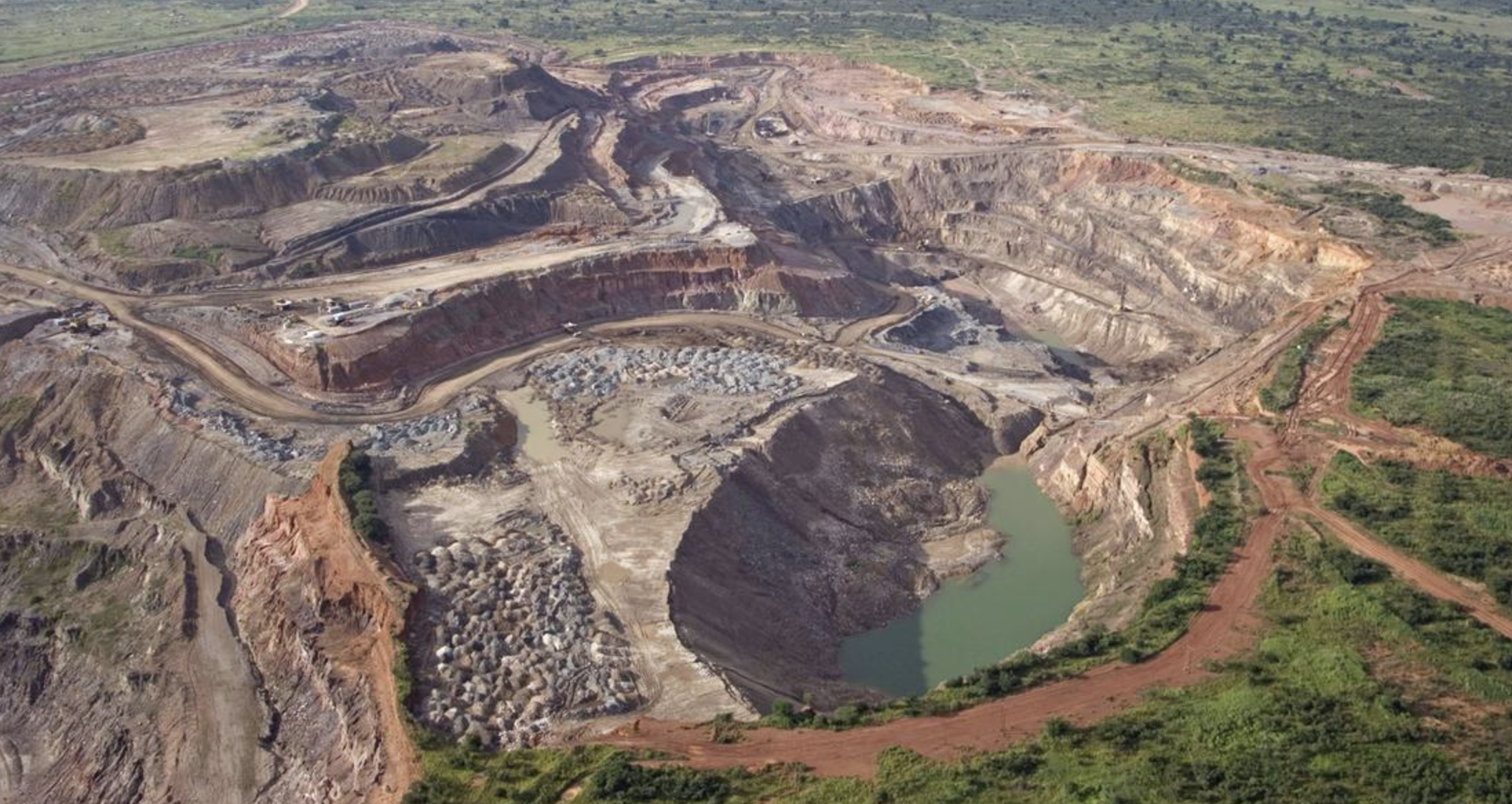
Two businessmen in Zambia have just bought the concession to operate a gold mine, as part of their broader commodities business ranging from precious metals to coal and rare earths.
They've been facing constant issues with their USD accounts at their local banks: wires are getting rejected, balances are getting stuck, and conversions to Zambian kwacha are a pain. In short, while their export business is growing, their current banking stack isn't levelling up in the same way.
They've been looking for alternatives for a while. South African banks aren't much better, and US banks don't easily offer accounts to commodity businesses outside the US, same for the UAE, Switzerland, or Hong Kong.
While on the lookout for alternatives, they can't help but notice the growing number of independent OTC desks in their country exchanging Zambian kwacha at real, liquid rates into USDt. They wonder why they shouldn't be able to use USDt for their business too, and so it goes: they download a Trust Wallet, get an address, and for the first time gain access to a USDt wallet equal to any other on the planet. There's no difference between the USDt in their wallet and the USDt in a wallet in New York. It has the same reserves, carries the same credit risk, and has the same mobility as any other USDt on the planet. And if local currency is required, they can simply hit up one of the various local OTC businesses that will help them convert from their stablecoin straight into Zambian kwacha. They've essentially solved their banking problem.
This dynamic describes the core mechanism currently driving commodity trade on-chain: producers in emerging markets have looked for, and found, a solution to their growing USD banking problem. Stablecoins provide this solution and more. They also provide a gateway into global financial products of reputable quality, such as Ondo's USDY, which is backed by treasury bills and delivers money-market, risk-adjusted returns, to anyone, regardless of where they are.
This seller-pressure into the commodity supply chain is pushing stablecoin usage upstream, because the exporters now prefer to be paid in stables. Their counterparties, whether brokers or traders buying from exporters directly, or refineries in countries such as the UAE, Singapore, or Hong Kong, are now looking to on/off-ramp into stables from either USD, AED, or HKD to make a cross-border payment in stables, instead of converting from HKD, AED, or SGD into USD to send a cross-border SWIFT wire.
But adoption doesn't stop here. Traders working upstream of refineries have gotten a taste of the advantages that stablecoins deliver, primarily instant settlement that works in line with their instant cross-border trade operations. Imagine a trader holding a cargo of oil in a terminal. They want to sell it to another trader in the space, who in turn already has another buyer lined up: three parties, one quick transaction. Without stables, the first buyer wires USD to the seller's account and waits a day; the cargo then switches ownership; the trader in the middle now sells it on to the next buyer, which again takes a day to settle and complete the trade. A trade that could have been settled in under an hour ends up taking several, even longer if one of those legs crosses a holiday or a weekend. Meanwhile the inventory is subject to fluctuating market prices, putting the trade itself at risk.
In short, USD settlement introduces unnecessary friction in the worst possible spot: the plumbing of the trade. Here too, further up the value chain, commodity buyers and sellers are uniquely positioned to benefit from the key advantages of stables, namely instant, verifiable cross-border settlement, with sufficient liquidity to ramp in and out of fiat through platforms such as Nxos whenever required.
These are the tangible advantages driving stablecoin adoption across our commodity customer group. We expect usage and demand to grow even further in the coming years, as more and more commodities are traded on-chain. An interesting side-effect of the current market environment is that, beyond stablecoins, commodities such as gold, silver, and oil are also among the very first real-world assets to be traded on-chain as derivatives (perps). This broadens the application from mere settlement to full-on inventory hedging and trade-financing in the very near future. Stablecoins here act as a gateway to new global financial products, accessible to anyone on-chain with an Nxos account.